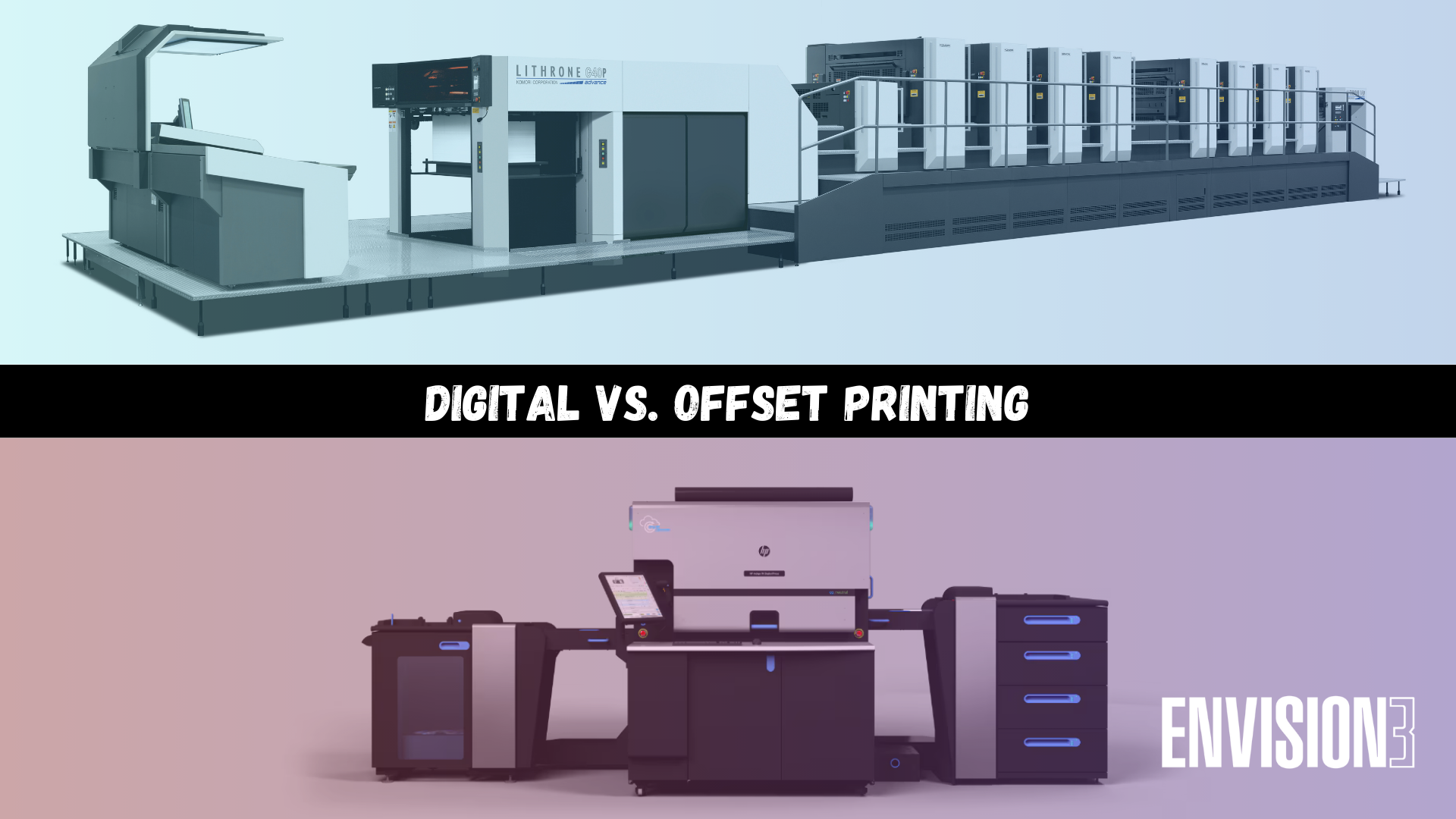
This isn’t Jeopardy. This is a real question.
When you think of digital printing, what comes to mind?
I’ve asked this question countless times over the years, and I get wildly different answers. That’s exactly why I wanted to write this article.
Some people think digital printing means cheap.
Others think short-run only.
Some assume low quality.
And others believe it’s simply a way to lower the cost per unit.
Each of these ideas has some truth to it — but none of them tell the full story.
Digital Printing Explained
At its core, digital printing means there are no printing plates.
That’s the main difference between digital printing and offset printing.
While the finished printed piece may look similar, the way the image gets onto paper is very different.
With digital printing, a digital file is sent directly to the press and transferred onto paper using an electrostatic charge. Some presses use toner, while others — such as the HP Indigo — use a liquid ink that behaves much more like traditional offset ink.
Because there are no plates involved, digital printing allows every sheet to be unique.
Examples of Variable Data Printing
With digital printing, you can easily change:
-
Names
-
Images
-
Offers
-
Languages
-
Versions
This flexibility is one of the biggest advantages of digital printing — especially for marketers.
How Offset Printing Differs
In offset printing, a fixed image is transferred from metal printing plates to a rubber blanket and then onto paper. If you want to change anything in the design, new plates must be created and mounted.
Offset printing excels at scale, but it’s far less flexible when changes are required.
Why Does Choosing the Right Print Method Matter?
Because there are multiple ways to print a piece, choosing the wrong method can cost you time, money, or even cause unnecessary branding issues.
The biggest misuse of digital printing usually comes from a misunderstanding of how it compares to offset printing.
A common belief is:
“Digital printing is for short runs, and offset printing is for long runs.”
That statement isn’t wrong — but it’s incomplete.
Knowing when to use digital printing vs. offset printing is what truly saves time and money.
When NOT to Use Digital Printing
Digital printing may not be the best choice if:
-
Color consistency is extremely critical across long runs
-
You’re producing very high quantities
-
The artwork is completely static and unlikely to change
When to Use Digital Printing
Yes, digital printing shines in short runs. There’s no plate cost, minimal setup, and no time spent bringing a press up to color.
That makes it ideal for:
-
Small quantities
-
Fast turnarounds
-
On-demand printing
However, quantity alone should never be the deciding factor.
Digital printing is often the right solution when:
-
You need personalization or variable data printing
-
You want to test multiple versions before scaling
-
Content updates frequently
-
You want to avoid storing outdated inventory
-
Speed and flexibility matter more than the lowest unit cost
In other words, digital printing is often a strategic decision — not just a budget decision.
Where Digital Printing Really Excels
This is where digital printing is most misunderstood — and undervalued.
Digital printing excels at:
-
Personalized direct mail campaigns
-
Versioned packaging
-
Short-run packaging prototypes
-
Targeted marketing materials
-
Regulatory or compliance updates
-
Just-in-time inventory
The Real Takeaway
Digital printing isn’t cheap print.
It isn’t low quality.
And it definitely isn’t only for short runs.
Digital printing is about flexibility, speed, and relevance.
When you understand what digital printing truly is — and what it’s best at — you stop asking “How many do we need?” and start asking “What are we trying to accomplish?”
That’s where the best print decisions are made.
Need Help Choosing Between Digital and Offset Printing?
Still unsure whether digital or offset printing is right for your next project?
That decision can significantly impact cost, turnaround time, and results.
👉 Let’s talk through your next project and make the right call upfront.
Contact us to get started.