If you’ve ever approved a design on your screen and then later opened the printed piece thinking, “Why does this look different?” – you’re not alone.
One of the most common (and frustrating) causes is the difference between RGB and CMYK. Designers talk about it. Printers warn about it. Marketers are often left wondering why it matters so much.
Let’s clear it up without the jargon.
The Short Answer
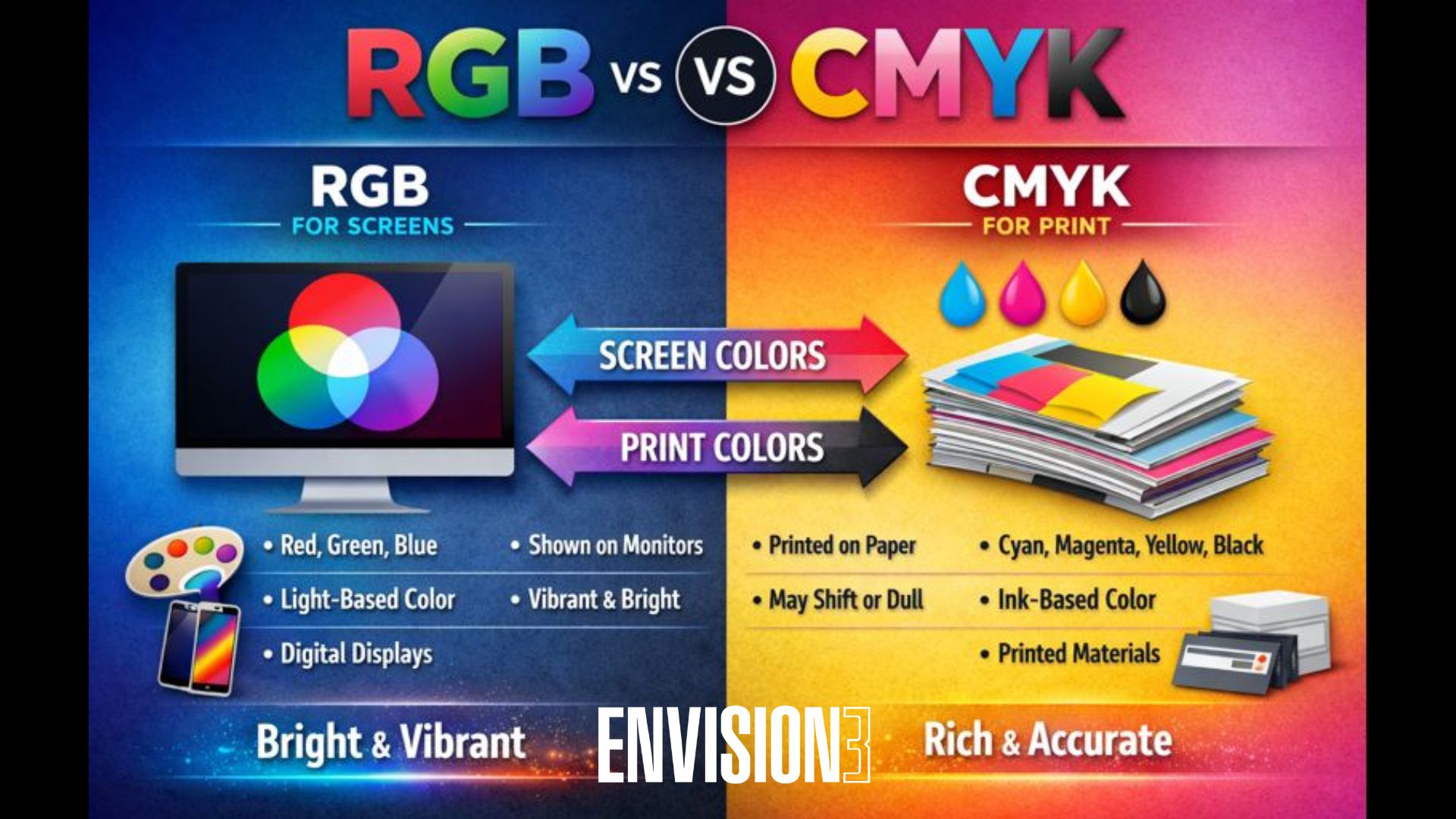
- RGB is how you see color on digital screens, monitors, tvs, etc.
- CMYK is how you see color on printed sheets of paper.
- RGB is a larger color gamut than CMYK, meaning there are more options for colors in RGB than there are in CMYK. Said differently – CMYK is a more limited color sphere.
Now that we got that out, let’s explore in more detail.
What is RGB?
RGB stands for Red, Green, Blue.
It’s a light-based color system, which means colors are created by emitting light. The more light you add, the brighter the color appears.
RGB is used for:
- Websites
- Social Media
- Email Campaigns
- Digital ads
- TV commercials
- Anything viewed on a screen
Because screens use light, RGB colors can appear brighter, more vibrant, and more saturated than what ink can physically reproduce.
What Is CMYK?
CMYK stands for Cyan, Magenta, Yellow, and Black
It’s an ink-based color system, meaning colors are created by layering ink on paper. Instead of emitting light, ink absorbs it.
CMYK is used for:
- Brochures
- Catalogs
- Packaging
- Direct mail
- Business cards
- Anything you can physically touch
Because ink has limitations, not every RGB color can be perfectly recreated in CMYK.
Why Colors Look Different in Print
Here’s the key thing marketers need to understand:
Your screen is showing you light. Your printed piece is showing you ink.
That difference alone can cause:
- Neon blues to look duller
- Bright greens to shift darker
- Vivid oranges to flatten
- Deep blacks to appear gray
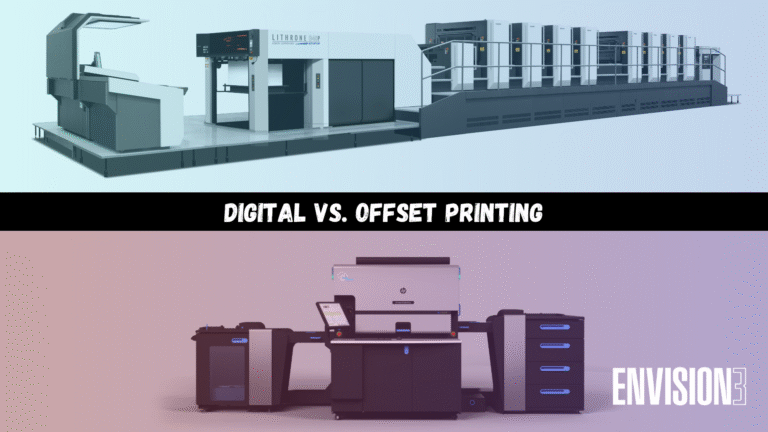
Paper plays a role too. A color printed on glossy stock, matte stock, or uncoated stock will never look identical across all three. Also a consideration is the type of printing – UV press, Conventional Press, Digital Press, Toner based or Inkjet. All these play a factor in color. With so many variables, it is no wonder colors can drift at times.
The Biggest Mistake We See
Designing entirely in RGB, then converting to CMYK at the last minute.
When that happens:
- Software makes automated color decisions
- Brand colors can shift
- Subtle gradients can band
- You lose control of the final look
The fix isn’t complicated — but it does require planning.
What Marketers Should Do Instead
Know Where the Piece Will Live
- Screen-only project? RGB is fine.
- Print involved? Plan for CMYK early.
Design in CMYK When Print Is the Goal
- This allows you to:
- See realistic color previews
- Make adjustments early
- Avoid surprises at press
Use Brand Colors Intentionally
- If color accuracy matters:
- Define CMYK values for your brand
- Consider PMS spot colors for critical brand elements
- Don’t rely on screen appearance alone
Proof Smart
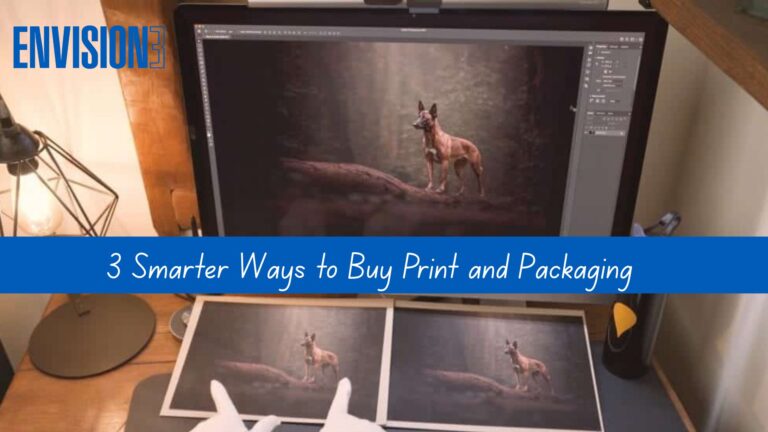
- Digital proofs are helpful — but they’re not perfect.
- For color-critical projects, a press proof or physical sample can save time, money, and frustration.
Can You Match My Screen Exactly?
Honest answer: Sometimes. Not always.
Great printers can get extremely close — but physics still apply. Ink, paper, lighting, and finishing all impact final color.
What is possible:
- Consistent CMYK color across pieces
- PMS colors to further lock in color match
- Accurate brand representation
- Predictable, repeatable results
That happens when the printer is involved early and exposed to all the information regarding the brand, not at the last step.
Wrapping it up
Color is a very fluid thing, despite putting numbers to them. RGB and CMYK are not the same thing, and cannot be treated as such when it comes to branding and color match. CMYK has limitations when compared to RGB, but nothing that can’t be overcome. Bring your printer into your color conversations early.
At Envision3, we achieve beautiful color across mediums. If you are lacking in this area, feel free to reach out for more info.